Not From Author only, Book You Love also From Your Brain
Your Loves, Your Minds
Prophet, Inference / Prime Geopolitica / Books represent your thoughts
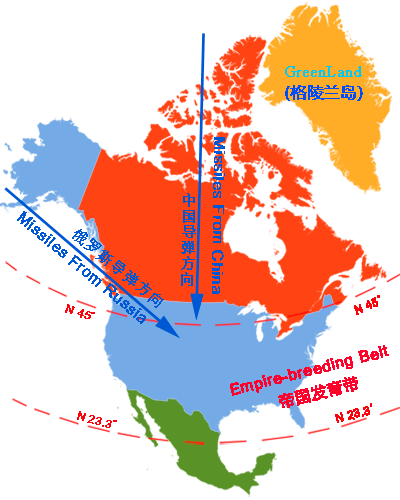
North America Empire
Trend, Reforms, Reformers
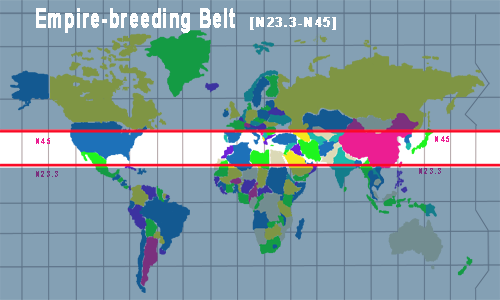
1. Imperial core in “Empire-breeding Belt”
2. Land Power vs. Sea Power Politics: Which Prevails?
3. Co-rulers of the land-based power order?
4. What Greenland does for a land-based America Empire?
5. How USA lead next Imperial Order?

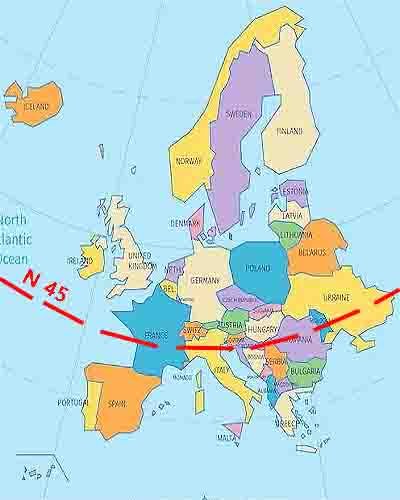
Core Europe Empire
Confusion, Loss, Suffering
1. Core Eu far from “Empire-breeding Belt”
2. Formally entering 200 yrs “Fading Cycle”
3. Social, Product, Wealth Logic hinder European resurgence.
4. What 2022 war means is whole EU becoming a colony or taxed zone.
5. Ukraine Trench divides Europe 100yrs+

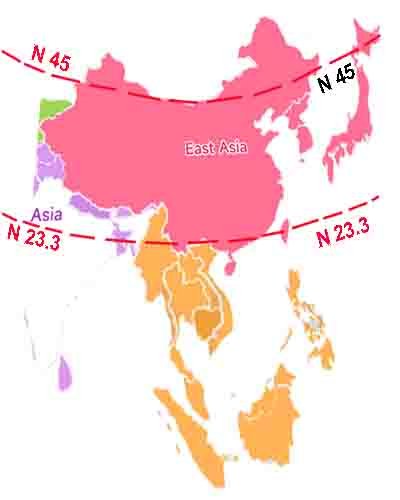
East Asia Empire
Impact, Unity, Re-centering
1. Asia: The Force Calling for a New Order.
2. Land power politics says, Regionalization asts. Sea-based power must go fading.
3. Land-based imperial order leads human history, Sea-based not.
4. Order means taking difference. Order be needed. Empire be needed always.

Crazy Ye’s vision on America Empire
America Empire is dynamic. Some figures continually emerge to propel its momentum.


Crazy Ye’s vision on E Asia Empire


Crazy Ye’s vision on Core Europe


How Crazy Ye think about next imperial order?
Land-based imperial order ,
Land Power Empires have dominated the central axis of human imperial history. Sea Power Empires are only transient or temporary substitutes.
(Empire-breeding Belt: By: Ye Qiquan; from pppnet.net )
Land Power Empire:
Land power politics already possesses the foundational power to dominate the world order.
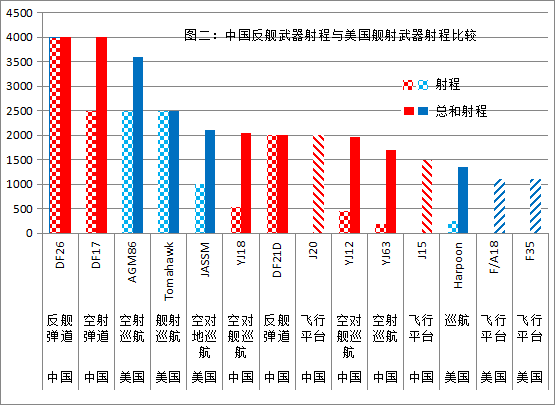
(Range: Chinese Anti-Ship Weapons vs. U.S. Ship-Launched Weapons. By Ye Qiquan, From pppnet.net)
Even if the United States were to defeat China in a war in East Asia, it would have to rely on land power rather than sea power
The decline of sea power politics is both a reality and a historical inevitability.
(Range of Medium-to-Short-Range Missiles: China vs. United States–By: Ye Qiquan; from pppnet.net)
Sino-American interactions will determine the type of next-generation imperial order:
The next-generation imperial order will primarily manifest in four variants
Intensity of War: China Alliance vs. United States Alliance (In a hypothetical East Asian war scenario: Illustration by Ye Qiqian; Source: pppnet.net)
“Maritime Power Empire”
Maritime empires are both easy to expand and prone to disintegration.

“Land Power Empire”
Both difficult to expand and impossible to completely dismantle its imperial foundations.

“Philosophical Logic”
The philosophical logic of the Chinese empire struggles to support establishing a globally encompassing imperial order.
“Conflict”
Land-based empires struggle to establish a global order; maritime empires struggle to resist land-based advantages in localized conflicts.
Effective Range
is determined by three factors: range, lethality, and cost-effectiveness.
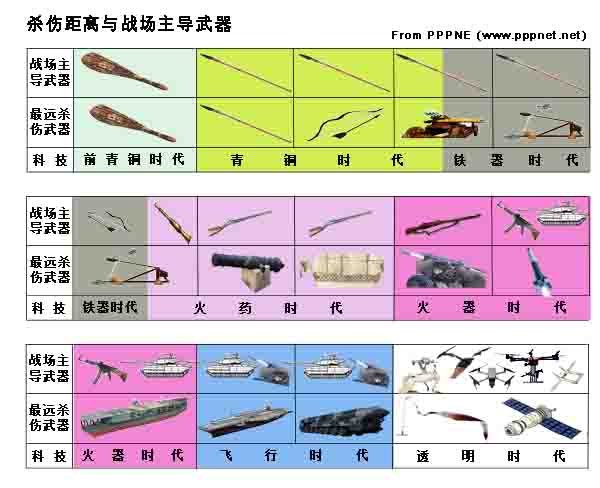
that defines the “dominant battlefield weapon” across different eras of military technology.
Crazy Ye’s War Theory
The Nature of War
War is a collective, sustained competitive action undertaken by species or groups to secure survival opportunities and reproductive capacity within the ecosystem. At the individual level, war manifests as combat capability. At the group level, war manifests as a state of being.
The Universal Nature of War
Universality refers to the state of war:
It is not exclusive to humans but shared by all life within Earth’s ecosystem.
It also signifies that competition for ecological position within the Earth’s ecosystem is a universal and persistent state for biological populations.
Minor differences in competitive ability will produce significant subsequent effects at the group level and throughout historical processes.
The Biological Nature of War
Biological attributes of war:
refer to war capabilities being encoded as individual traits within the DNA database of all living beings (including humans), ready for immediate activation.
At the group level, slight individual uniqueness converges toward group conformity. Under war pressure, group attributes are stimulated or amplified. Altruistic and egoistic traits fuse under the stimulation of group attributes.
The Economic Nature of War
War is an eternal theme in biological evolution and development. Economic necessity serves as the sole guiding principle and driving force of the war process.
The economic attributes of war comprise three components.
The causes of war are driven by economic objectives.
The course of war is dominated by economic resources.
The outcome of war is determined by economic adjudication.
The Political and Philosophical Nature of War
Human warfare possesses a unique attribute absent in other species’ conflicts: its philosophical and political dimensions.
This means war is not humanity’s sole means of survival. Humans possess the “capacity to actively evade and avoid war.” This constitutes the distinctive attribute of human warfare.
The Universal Nature of War
War is a shared attribute among all life within Earth’s ecosystem. Human warfare primarily manifests in the competitive struggle with other biological populations.
Historically, humanity’s evolutionary journey has been exceptionally arduous. In the future, even more brutal and perilous wars will unfold in the competition between humans and other biological groups or “biological-like groups.”
Humans cannot cease maintaining, cultivating, and evolving their competitive capabilities. They cannot reject war, nor can they voluntarily weaken their competitive (warfare) abilities.
The Biological Nature of War
The biological nature of war:
War is a biological capability. It is a shared capacity among all living beings to achieve sustained species evolution and reproduction by enhancing their competitive abilities.
This war capability becomes a form of DNA memory, encoded within the biological DNA database. The war attribute is not only inherited and passed down at the individual level but also continuously developed and evolved at the group level.
The Economic Nature of War
Single-celled organisms and plants utilize intelligent information perception and computational systems to identify the optimal integrated solution for individual survival and population propagation.
Animals comprehensively calculate food pressure and war costs to select their ecological niche.
Humans relentlessly pursue the greatest possible weapon range as their goal. In actual warfare, humans achieve victory by leveraging optimal effective ranges. Human warfare is fundamentally a competition centered on economic power. Ultimately, the group that wins the economic competition wins the war. Learn more
The Political and Philosophical Nature of War
Philosophically, humans are the only beings in Earth’s ecosystem possessing both animal and plant attributes.
Humans have transcended the path of other animals, who must rely on war and plunder to sustain individual survival and group reproduction. Agricultural technology is the foundation for humanity’s liberation from war. From this point, humans can contemplate war, pursue war, or evade war.
War also serves as a factor establishing human social structures, maintaining evolutionary drive, and preventing the degeneration of human competitive capabilities. Learn more
Hot, Hot, Hot
Hot Topics
Iran, Taiwan, Israel, Southeast Asia, Indian Ocean Corridor
Crazy Ye ‘s Commentary on Taiwan
Taiwan’s Significance to the East Asian Empire
Although the body and core of the next Asian empire reside in mainland China, the East Asian Empire must emerge as a cohesive, integrated structure within the global order. Taiwan’s importance to China has been extensively discussed (including by Crazy Ye). However, from a philosophical perspective, Taiwan’s greater significance lies in its role as the switch integrating Japan and South Korea into the entire East Asian imperial system. The electrical stimulus released by this switch will accelerate Japan’s pace of “disengaging from Europe and returning to Asia.”
China must understand Taiwan and Japan from this angle. The Japanese should even more closely align their understanding of mainland China, Taiwan, and Japan itself with this perspective. This is the optimal path for Japan to resolve its century-old dilemma.
Taiwan: The Cornerstone of the Chinese Empire
。
Taiwan: The Pivot Where Land Power Suppresses Sea Power
。
Taiwan: The Switch Activating East Asian Integration
。
Taiwan: Governance Process Will Not Be Smooth
。
Smooth governance is crucial for the mainland.
。
There are difficulties in smoothly governing Taiwan.
。
Ensuring “historical integrity” is crucial in the process of governing Taiwan.
。
Four safeguards to ensure the “historical integrity” of the Taiwan governance
。
Hot Topics
.
What Iran Solution Should Great Powers Choose?
The Israeli Question in the Arab World
The “Historical Integrity Solution” for Governing Taiwan
How to Accelerate the Process of Winning Hearts and Minds in Taiwan?
What Taiwan Solution Can Advance China’s Imperial Development Rather Than Become a Burden?
Does Europe Face a Turkey Dilemma?
How Should Russia Define Its Long-Term Caucasus Strategy?
How Should China Define Its Imperial Foundation and Advancement Strategy?
Will Japan Align with China in a Sino-US Conflict?
How to Solve Japan’s Century-Long Dilemma?
How Can Russia Increase Its Initiative in Sino-Russian Relations?
Europe’s Painful Process and Foundations for Re-Emergence
Russia’s Next Century Goals
Russia’s Painful Process After Imperial Disintegration
Philosophy as Meta-Politica
The optimal approach to understanding military issues is through economic and political perspectives. The optimal approach to deeply understanding political issues is through philosophy.
However, philosophy has entered a phase where it itself requires salvation. Not only is philosophy incapable of saving humanity, it cannot even save itself.
A handful of political giants once cast their brilliance into the realm of philosophy as amateurs, causing it to briefly radiate dazzling light. With the passing of these great political figures, philosophy once again descended into obscurity.
Before achieving its grand goal of saving humanity, philosophy must first save itself.
Could Crazy Ye’s “Philosophy of Knowledge” be the remedy?
Does philosophy require a formal disciplinary structure? Or a disciplinary framework?
Fill Out the Form Below and Get a
Newsletter
This is an online bookstore specializing in the works of Ye Qiquan. Known to his friends as “Crazy Ye,” he is renowned for making audacious political predictions. His major forecasts often contradict—and sometimes completely oppose—those of professional politicians, major political forecasting institutions, globally renowned news agencies, and prominent political commentators. Regarding Hong Kong affairs, he effectively outmaneuvered the entire intelligence, diplomatic, and governmental apparatus of the United States and the United Kingdom. In anticipating Xi Jinping’s emergence as a hardline politician, he surpassed Western political forecasting institutions and professionals by at least six years. Regarding Hu Jintao’s complete failure, he made a clear judgment at least ten years in advance. In a letter submitted to Chinese diplomats in September 2025, he even explicitly stated that “success cannot be achieved by relying on Hu Jintao in complex circumstances.” In March 2025, he issued an early warning that Xi Jinping might face significant risks. By September 2025, his assessment of the situation was that “all three parties face complex environments.” “The faction holding the moral authority, the military, and other politically-aligned forces” all faced severe difficulties. Each needed to find “deep, comprehensive, and complex entry and exit points.”
In fact, the Ukraine war reborn “Crazy Ye.” Because of this war, Ye became convinced his political genius far surpassed that of the world’s major politicians and national leaders. Within the first two, three, and four months of the war, he issued a series of political forecasts. These major predictions have been progressively validated by nearly four years of wartime developments. Had relevant nations adopted his projections, they could have avoided at least hundreds of billions of dollars in futile expenditures.
“Crazy Ye’s” shortcomings are evident. He cannot respond swiftly to current events because he lacks any internal intelligence sources.
Some of his long-term forecasts also conflicted with the details of his proposed scenarios. Yet it was precisely this approach—unburdened by reliance on insider sources—that ultimately enabled him to outperform numerous national government agencies, intelligence services, and major political think tanks in both political forecasting and long-term projections.
Doctoral candidates in political science, philosophy, and military strategy, along with their advisors, are recommended to monitor “Crazy Ye’s” related websites. Long-term political investors, government agencies, policy-making bodies, industrial investors engaged in long-term investments, and even short-term venture capitalists are all welcome to purchase “Crazy Ye’s” products. Customized products can be provided.
pppnet.net is a blog site operating in parallel with this website. It features the blog writings of (Crazy Ye). As both sites are currently operated by a single individual, updates are slow. Please be patient.